Real Talk: Why Postpartum Bodywork Is the Self-Care You Didn't Know You Needed
Okay, mama, let's have a real conversation. You just did something absolutely wild — you grew a human, birthed a human, and now you're keeping that human alive on approximately four hours of sleep. And somewhere in your to-do list (right under "figure out feeding schedule" and "answer 47 work emails you've been ignoring"), your own body's recovery probably slid to the bottom.
We're here to move it back to the top.
I believe postpartum care isn't an indulgence — it's a non-negotiable part of recovering well, feeling like yourself again, and showing up for everything (and everyone) on your plate. And some of the most powerful tools in that recovery toolkit? Massage, rebozo work, and the closing the bones ceremony. If you've never heard of these, buckle up — you're about to want to book all three.
First Things First: What Does a Postpartum Doula Actually Do?
Think of a postpartum doula as the support system you didn't know you were missing — someone in your corner during the fourth trimester whose entire job is making sure you are cared for, not just the baby. While a birth doula is there for labor and delivery, a postpartum doula shows up after, helping with newborn care, feeding support, light household help, emotional check-ins, and yes — hands-on bodywork designed specifically for what your body just went through.
For the busy professional mom who's used to being the one everyone else relies on? This is your permission slip to be taken care of for once.
The Bodywork Trifecta: Massage, Rebozo, and Closing the Bones
Postpartum Massage: More Than Just "Treat Yourself"
We get it — when you're juggling a newborn and (let's be honest) probably still checking Slack, "massage" might sound like a nice-to-have you'll get to "someday." But postpartum massage isn't just relaxing — it's recovery, working behind the scenes while you focus on everything else:
Helps flush out the swelling and fluid retention left over from pregnancy and delivery
Releases the neck, shoulder, and back tension that comes from hours of feeding, rocking, and hunching over a tiny human
Boosts circulation to support healing — whether you're recovering from a vaginal birth or a c-section
Lowers stress hormones and boosts oxytocin, helping you feel calmer, more grounded, and more you
Supports your uterus as it does the work of returning to its pre-pregnancy state
A doula trained in postpartum massage knows exactly how to work with your body where it's at — gentle, intentional, and tailored to whatever healing looks like for you right now.
Rebozo: The Original "Wrapped in Support"
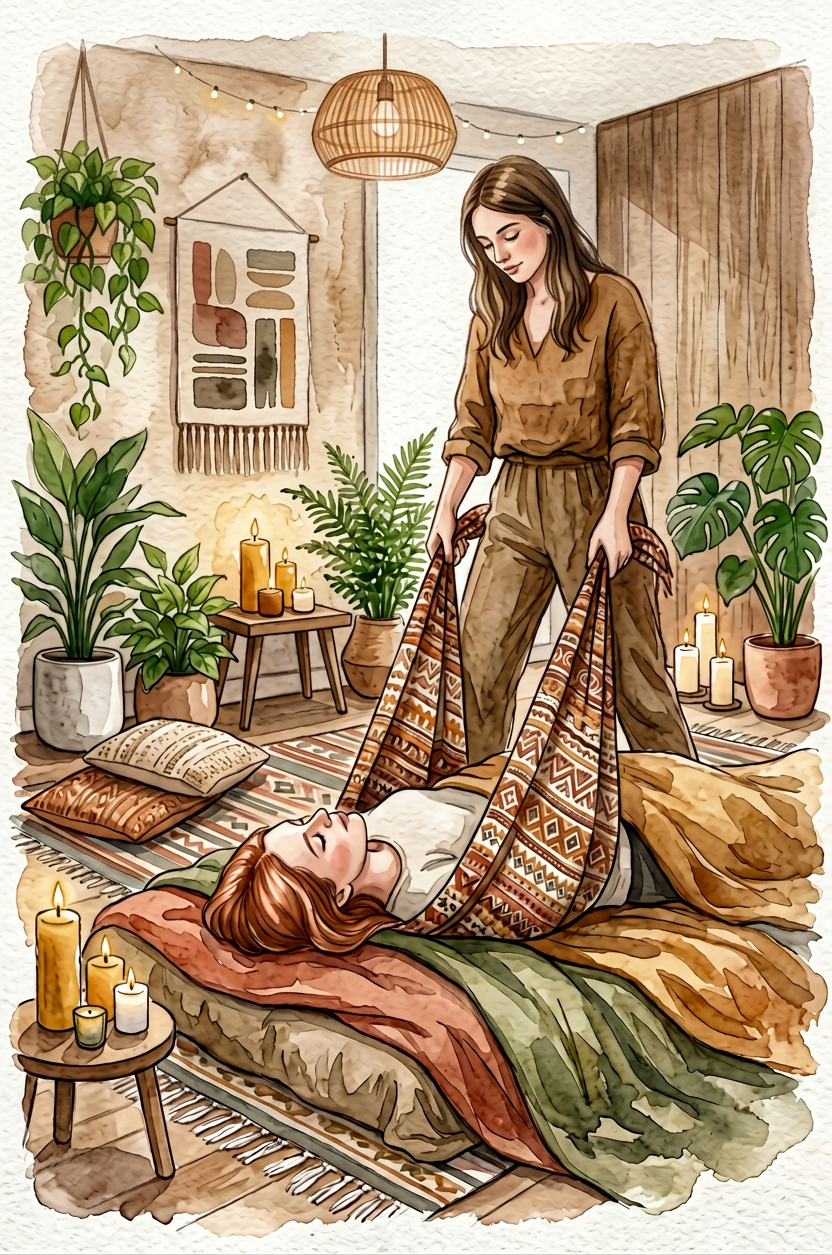
The rebozo is a traditional woven shawl, used for generations in Mexican midwifery — and once you experience it, you'll understand why it's stuck around. While rebozo is well known as a labor tool, it's an absolute powerhouse postpartum too.
Here's what rebozo work can do for you:
Provides gentle, full-body compression around your hips, belly, and lower back — like your body is finally getting the hug it's been needing
Uses rhythmic rocking and movement to calm your nervous system (hello, deep exhale)
Supports your pelvis and hips as they recalibrate after birth
Honestly? If you've spent the last several weeks being the one who holds everything together, rebozo work is your turn to be held.
Closing the Bones: Your Fourth Trimester Finale
If postpartum bodywork had a grand finale, this would be it. Closing the bones is a ceremonial practice with roots across multiple cultures — from Mexico to Indonesia to Malaysia — and it's exactly what it sounds like: a ritual to help your body (and your hips, specifically) close back up after the opening that happens during birth.
A typical closing the bones session might include:
A warm herbal bath or steam to help you relax and release
Rebozo wrapping and rocking to physically and energetically realign your hips and pelvis
A final gentle binding around your belly, hips, and sometimes head
Beyond the physical benefits (less pelvic instability, less lower back pain, less "why does my body feel so loose"), this ceremony does something else — it gives you a moment. A moment where the focus is entirely on you, marking the transition from pregnant to postpartum, from birth to becoming.
For the mom who's always taking care of everyone else first? This is your moment. Take it.
Why This Matters — Especially for You
You're busy. You're capable. You're probably already back to handling a thousand things, because that's what you do. But here's the thing: your body just went through something massive, and "pushing through" isn't a recovery plan — it's a fast track to burnout.
Postpartum bodywork gives you:
Real physical relief — less back pain, less pelvic tension, less "everything hurts and I don't know why"
A reset for your nervous system — because calm isn't a luxury, it's fuel
A ritual of closure — a dedicated moment to honor what your body did and start the next chapter feeling supported
Permission to receive care — something so many high-achieving moms forget how to do
Ready to Feel Like Yourself Again?
This is exactly the kind of care I was built to provide — bodywork rooted in tradition, backed by real benefits, and delivered with zero judgment about how "together" you're supposed to look right now.
If you're in your fourth trimester (or know you'll want this lined up before baby arrives), let's talk. Book a consultation to chat through what your postpartum support could look like, or head over to our services page to see everything we offer — including massage, rebozo, and closing the bones sessions designed specifically for moms like you.
You took care of growing and birthing this baby. Let us help take care of you.